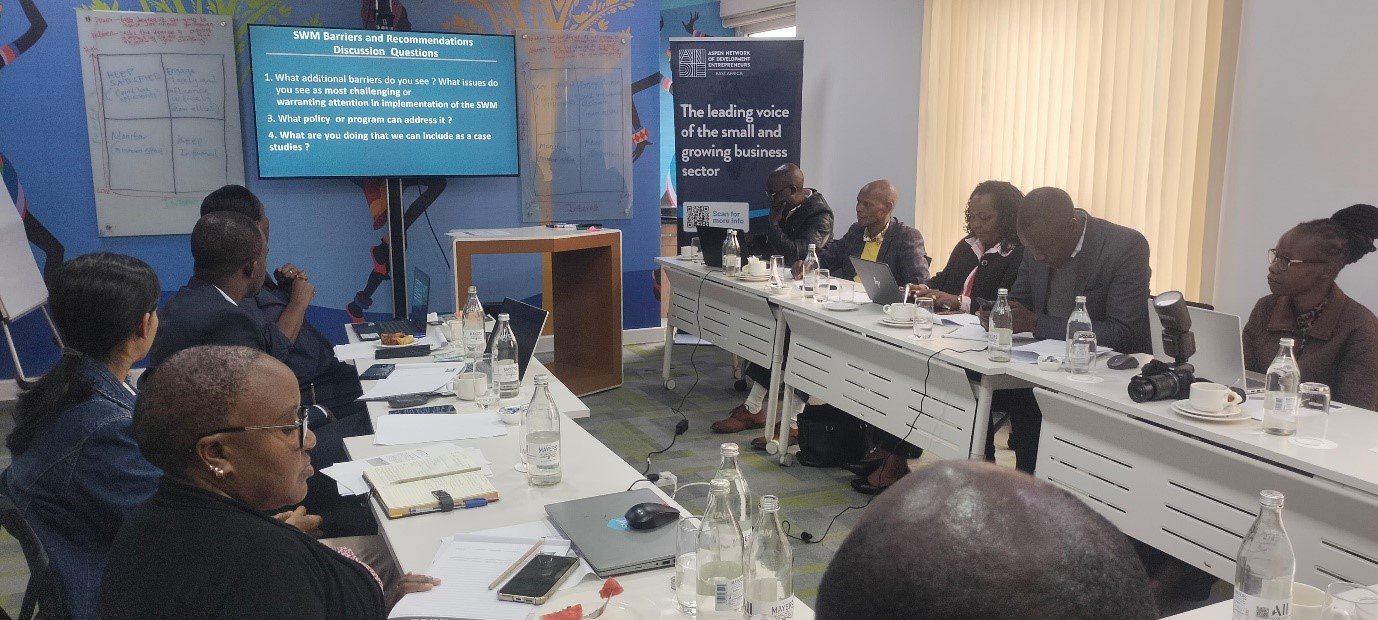
Nairobi, 8th July 2025 — A multisectoral policy working group met yesterday in a high-level roundtable organized by the Kenya Association of Waste Recyclers (KAWR) and the Aspen Network of Development Entrepreneurs (ANDE) to spotlight Kenya’s transition to a circular economy and explore green financing opportunities under the Sustainable Waste Management Act (2022).
Held under the theme “Access to Green Finance & Inclusive Circular Transitions,” the forum brought together policymakers, recyclers, Producer Responsibility Organizations (PROs), green technology experts, and development partners. Discussions centered on the implementation of Extended Producer Responsibility (EPR) and its implications for SMEs, jobs in the waste sector, and Kenya’s climate goals. This was the second session in the policy series, following the first dialogue held on 22nd November 2024.
Key Highlights from the Dialogue
- EPR in Action: The Act’s provisions on producer responsibility, county-level material recovery facilities, and waste-to-energy solutions present significant opportunities for waste reduction, resource efficiency, and job creation. However, gaps remain in monitoring, enforcement, and inclusive implementation.
- SME Constraints & Green Finance Gaps: Circular startups face limited access to patient capital. Participants urged the development of blended finance instruments, credit guarantees, and impact-linked funding aligned with climate goals.
- Informal Sector at Risk: The transition to regulated waste systems risks excluding informal workers. Speakers called for legal recognition, cooperative models, and gender-inclusive frameworks to safeguard livelihoods.
- Policy Coherence and Urgency: With supportive legislation already in place, stakeholders stressed the need for fast-tracked implementation—particularly sector-specific EPR guidelines, green procurement standards, and the activation of a national waste data management system.
Recommendations Moving Forward
- Operationalize EPR Guidelines and Monitoring Systems
- Finance Innovation: Establish circular innovation clusters and green financing instruments tailored to SMEs.
- Formalize the Informal: Protect livelihoods through training, social protections, and cooperative strengthening.
- Build County-Level Circular Hubs: Promote local waste-to-value ecosystems.
- Boost Public Awareness: Align communities with EPR requirements through widespread education campaigns.
- Strengthen Waste Data Systems: Improve accuracy and accessibility of national waste data.
- Develop Infrastructure: Invest in Material Recovery Facilities, especially at county level.
- Address Regulatory Barriers: Introduce subsidies and incentives for circular businesses.
- Align Recycled Products with Global Standards: Ensure Kenya’s recyclables meet international market requirements.
Building on Grassroots Innovation
This Nairobi dialogue builds on earlier groundwork laid in April 2025, when KAWR and ANDE, supported by SoteHub, hosted a series of interactive forums in the Coastal Region. These sessions showcased grassroots circular economy innovations—from Afya Duara CBO’s organic composting and youth training in Mtwapa, to Twende Green’s plastic recycling and 3D printing, and Tiki Post’s recycled plastic fencing alternatives at the SoteHub Center in Nyali.
These engagements highlighted how SMEs and community-based enterprises are already anchoring Kenya’s green transition at the grassroots level.
From Grassroots to National Policy
Notably, KAWR Secretary General Richard Kainika’s keynote in Mombasa set the tone for the Nairobi roundtable, calling for regulatory reforms, stronger EPR enforcement, SME financing, and inclusion of the informal sector. The 8th July event, therefore, marked a natural progression—from showcasing practical, community-led innovations to shaping the national policy and financing frameworks required to scale them.
Together, these engagements represent a coordinated push towards a more inclusive, resilient, and circular Kenyan economy.
0 Comments