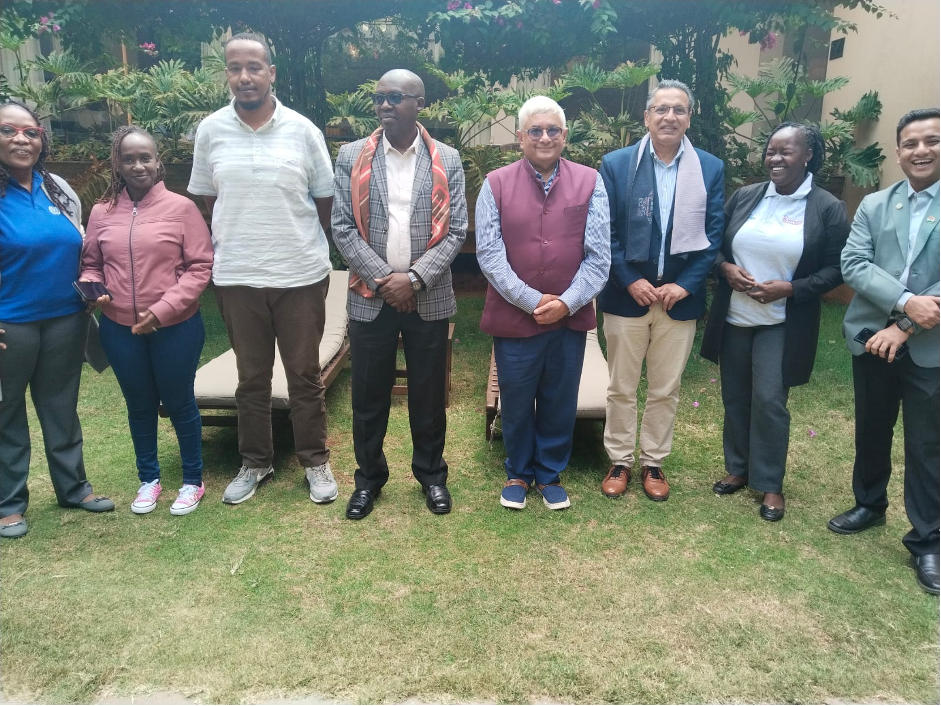
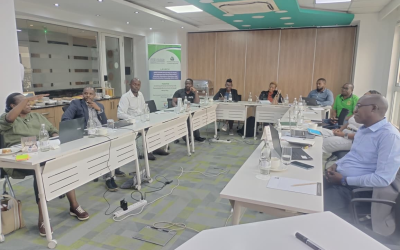
From the left; Josphine Kawira(DRC), Hellen Chege(DRC), Yasin Abukar(My-Plastics Ltd.), Richard Kainika (KAWR), Dr. Sameer Joshi( IPI), Shabbir Noormohamed(My-Plastics Ltd.),Joan Maitai( DRC), Sharang Ambadkar (IPI).
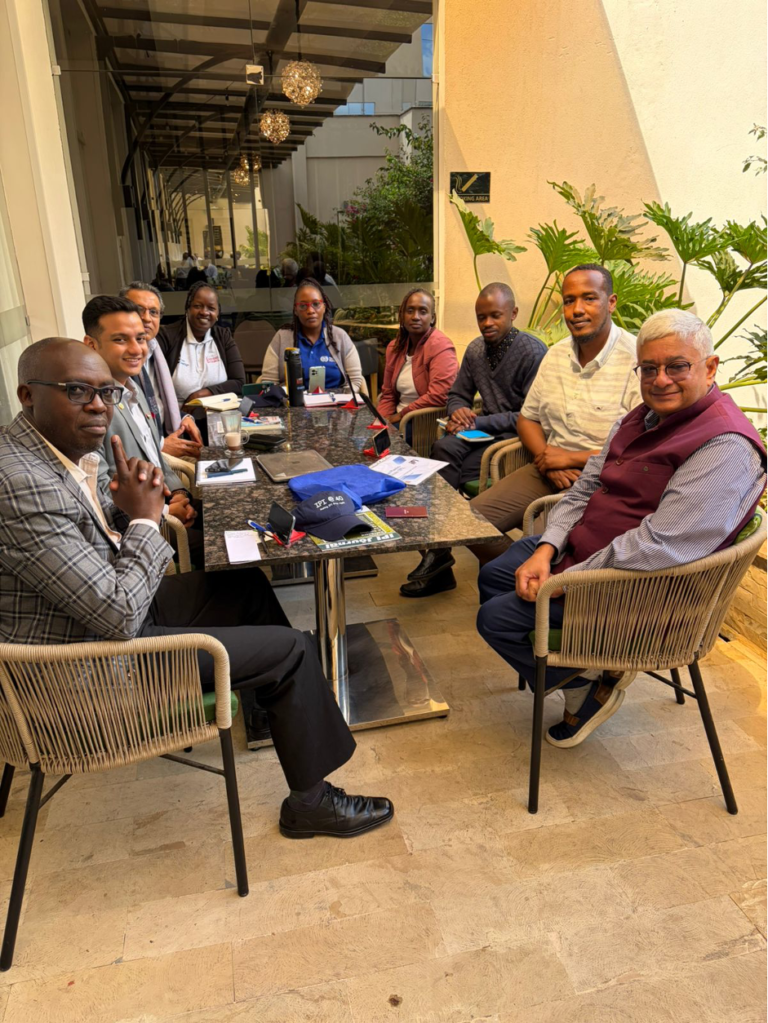
The Kenya Association of Waste Recyclers (KAWR) was honored to host a working meeting with the Indian Plastics Institute (IPI) at the DoubleTree by Hilton, Ngong Road, Nairobi. Established in 1985, IPI is a leading professional body that brings together experts, industry practitioners, and students in the fields of plastics and polymer technology. The institute focuses on strengthening technical capacity through training programs, specialized courses, seminars, and industry–academia collaboration. IPI also plays an active role in standardization, quality assurance, and public awareness on plastics, their applications, and recyclability.
Also in attendance were representatives from the Danish Refugee Council (DRC) Kenya and My Plastics Limited, enriching the discussion with perspectives from both the humanitarian and private sectors.
The meeting centered on shared priorities between KAWR and IPI, with a particular focus on opportunities and challenges within Kenya’s waste management sector. Dr. Sameer Joshi, Chairman of the Indian Plastics Institute and a globally respected expert in plastic sustainability with over 30 years of experience, shared valuable insights on India’s progress in advancing plastic circularity. India has made significant strides by leveraging its strong technological capacity to develop solutions for low-value and hard-to-recycle plastics, including multilayer laminates.
Through IPI-led initiatives, these challenging materials have been successfully transformed into practical products such as planks, plywood alternatives, benches, tiles, and other utility items, offering viable substitutes for materials with higher carbon footprints. These innovations were further demonstrated by Mr. Sharang Ambadkar, a member of the IPI Environment & Ecology Committee and Sustainable Solutions for All.
The exchange was particularly relevant for Kenya, where hard-to-recycle packaging materials continue to pose a significant challenge. While promising local initiatives are underway, many require scaling and technical enhancement to meet national demand. The engagement highlighted the potential for cross-country collaboration, technology transfer, and capacity building to accelerate Kenya’s transition toward a more inclusive and circular plastics economy.
India’s well-established Extended Producer Responsibility (EPR) framework offers valuable lessons for emerging systems. Its structure has successfully supported the recycling ecosystem while accounting for the diverse economic realities of enterprises across different scales. With Kenya gaining renewed momentum following the lifting of the conservatory order affecting EPR implementation on 20 November 2025, such international perspectives can play a critical role in informing the country’s evolving EPR practices and strengthening a more inclusive, efficient, and sustainable implementation approach.
KAWR and IPI expressed a shared commitment to developing a Memorandum of Understanding (MoU) focused on technical knowledge exchange and capacity building. Leveraging IPI’s decades of experience, Kenya stands to benefit from innovative, context-appropriate solutions tailored to its waste-management landscape. In addition, tapping into IPI’s global networks could enhance Kenya’s visibility on international sustainability platforms. The discussions also explored opportunities for Kenya to host major global forums on plastics and circularity, further positioning the country as a regional leader.
0 Comments