Kenya’s recycling sector is often celebrated as a success story within Africa’s growing circular economy movement. From community-based waste collection systems to large-scale industrial recyclers supplying global markets, the narrative is compelling: waste is being turned into value, livelihoods are being created, and the environment is being protected.
But beneath this optimism lies a quieter, more complex reality—one that is increasingly shaping the future of recycling in the country.
A reality where not all plastics are treated equally.
A Market That No Longer Buys Everything
Traditionally, Kenya’s plastic recycling ecosystem operated on a simple principle:
collect as much material as possible, sort it, process it, and sell it into available markets.
This model supported a wide network:
- Waste pickers
- Aggregators
- Small and medium processors
- Large recycling companies
Each played a role in ensuring that plastic waste moved along the value chain.
However, over the past few years, a noticeable shift has occurred.
Many recyclers especially large and established recyclers are increasingly selective in what they buy. Rather than taking in mixed streams of plastic, many now focus on:
- High-density polyethylene (HDPE), particularly clear or natural grades
- Medium-sized containers
- Materials with minimal contamination
At the same time, they are avoiding:
- Polypropylene (PP), especially darker variants
- Smaller-sized plastics
- Heavily contaminated materials
This is not accidental or arbitrary—it is strategic.
These companies are aligning their sourcing with specific offtake contracts, often tied to strict quality requirements from multinational buyers. In effect, they are no longer just recyclers; they are feedstock managers operating within tightly defined specifications.
While this makes commercial sense at the firm level, it is quietly reshaping the entire ecosystem.
The Rise of “Orphan Plastics”
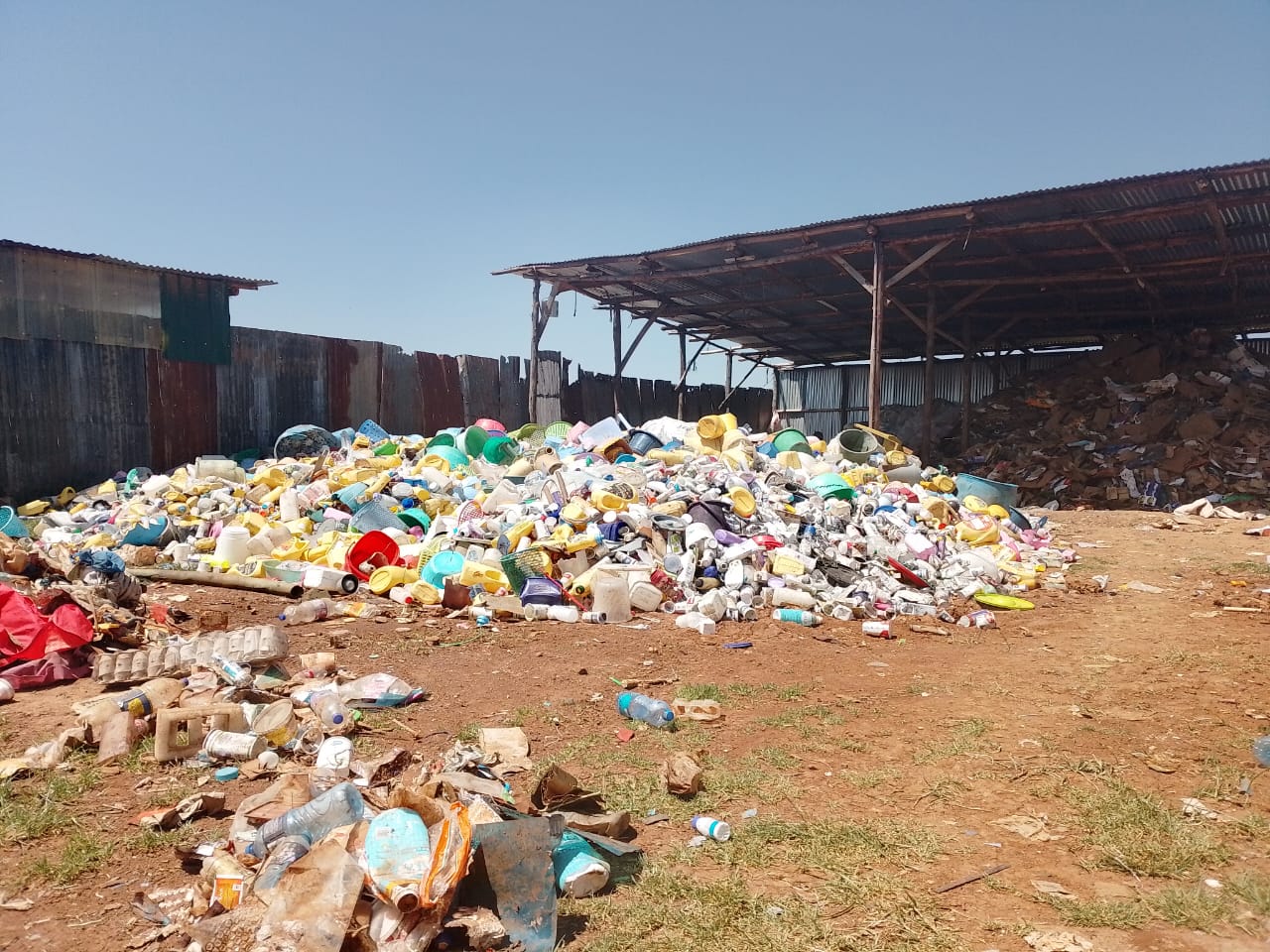
As demand concentrates around a narrow range of materials, other plastics are being left behind.
Polypropylene (PP) offers a clear example.
In many parts of the country:
- Waste pickers sell PP at around KES 25 per kilogram
- Aggregators trade it at KES 35–38
- Processors sell at KES 46–50
At first glance, this appears viable. But in reality, that margin is insufficient to cover:
- Transport
- Sorting
- Grinding
- Washing
- Labour and energy
For lower-demand fractions such as black PP, the situation is even more severe.
Processors report holding stock for months—sometimes up to a year and a half—due to lack of buyers, with market prices dropping as low as KES 35–40 per kilogram.
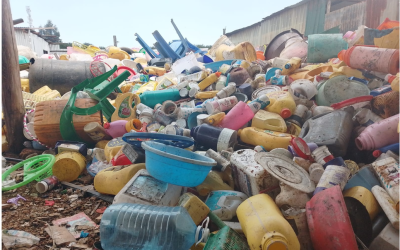
These materials have effectively become “orphan plastics”—collected, stored, but with no viable market pathway.
A Two-Speed Recycling Economy
What is emerging is a two-tier system:
Tier One: Contract-Driven Recycling
- Large players
- Selective sourcing
- Guaranteed offtake
- Strong, stable margins
Tier Two: Open-Market Recycling
- Small and medium enterprises
- Mixed plastic collection
- Uncertain demand
- Compressed or negative margins
For those in the second tier, the challenge is existential.
They continue to perform the essential function of collecting and processing all materials, yet they lack:
- Market power
- Price control
- Guaranteed buyers
In effect, they are carrying the burden of system-wide waste recovery without the financial structures needed to sustain it.
It is therefore not surprising that, as consistently observed by Kenya Association of Waste Recyclers, the highest rate of enterprise mortality occurs within this middle processing layer.
The VAT Paradox
Overlaying these market dynamics is a policy challenge that further complicates the situation.
Recycling businesses are required to charge 16% VAT on their materials and services. Yet in practice:
- Buyers are unwilling to absorb this additional cost
- Sellers cannot pass it on without losing competitiveness
The result is predictable:
VAT is absorbed within already thin margins, effectively converting marginal operations into loss-making ones.
This raises an important question:
Should recycling be treated purely as a commercial activity, or as an environmental service essential to national sustainability goals?
The Illusion of a Fully Functioning System
From a distance, Kenya’s recycling ecosystem appears vibrant and functional.
Materials are being collected.
Factories are operating.
Recycled products are entering the market.
But this view obscures a critical imbalance:
The system rewards the recycling of what is easy and profitable—while neglecting what is difficult but environmentally necessary.
In doing so, it creates a structural gap between:
- Recycling (driven by market demand)
and - Waste recovery (which requires systemic responsibility)
Without deliberate intervention, this gap will continue to widen.
Rethinking the System: Towards Inclusive Circularity
Addressing this imbalance requires more than incremental adjustments. It calls for a shift in how the system is designed and governed.
Key considerations include:
1. Strengthening Extended Producer Responsibility (EPR)
Producers must take responsibility not just for high-value plastics, but for all materials they introduce into the market, including low-value and hard-to-recycle fractions.
2. Supporting Low-Value Materials
Mechanisms such as subsidies or recovery incentives may be necessary to ensure that materials like PP and multi-layer plastics remain economically viable within the system.
3. Creating Market Access for SMEs
Smaller processors need structured access to offtake markets—whether through aggregation platforms, guaranteed pricing mechanisms, or facilitated linkages.
4. Revisiting Tax Policy
There is a strong case for reconsidering VAT treatment within the recycling sector, recognizing its role in delivering public environmental goods.
5. Driving Design for Recycling
Ultimately, the problem begins upstream. Packaging design must evolve to reduce the prevalence of materials that are difficult or uneconomical to recycle.
A System at a Crossroads
Kenya stands at a critical moment in its circular economy journey.
The progress made so far is significant and commendable. But the current trajectory risks creating a system that is:
- Efficient for a few
- Fragile for many
- Incomplete in its environmental impact
If left unaddressed, the consequences will be clear:
- Continued exit of small and medium recyclers
- Increased plastic leakage into the environment
- Growing inequality within the value chain
Looking Ahead
This article is the first in a series that will seek to illuminate the evolving realities of recyclable materials markets in Kenya—not just plastics, but across the broader spectrum of waste streams.
Because if we are to build a truly circular economy, we must move beyond surface-level success stories and engage with the complexities on the ground.
Only then can we design systems that work—not just for materials that are easy to recycle, but for the entire ecosystem that depends on them.

0 Comments